
Restoration marketing when the first call wins the job and national call centers want it too.
Where restoration jobs really come from, what a local company can show that a call center cannot, and the first five minutes of a water damage call.
Last reviewed November 20, 2026 against Google's own help pages. Google changes these rules often; if a step doesn't match what you see, trust the help page linked in Sources.
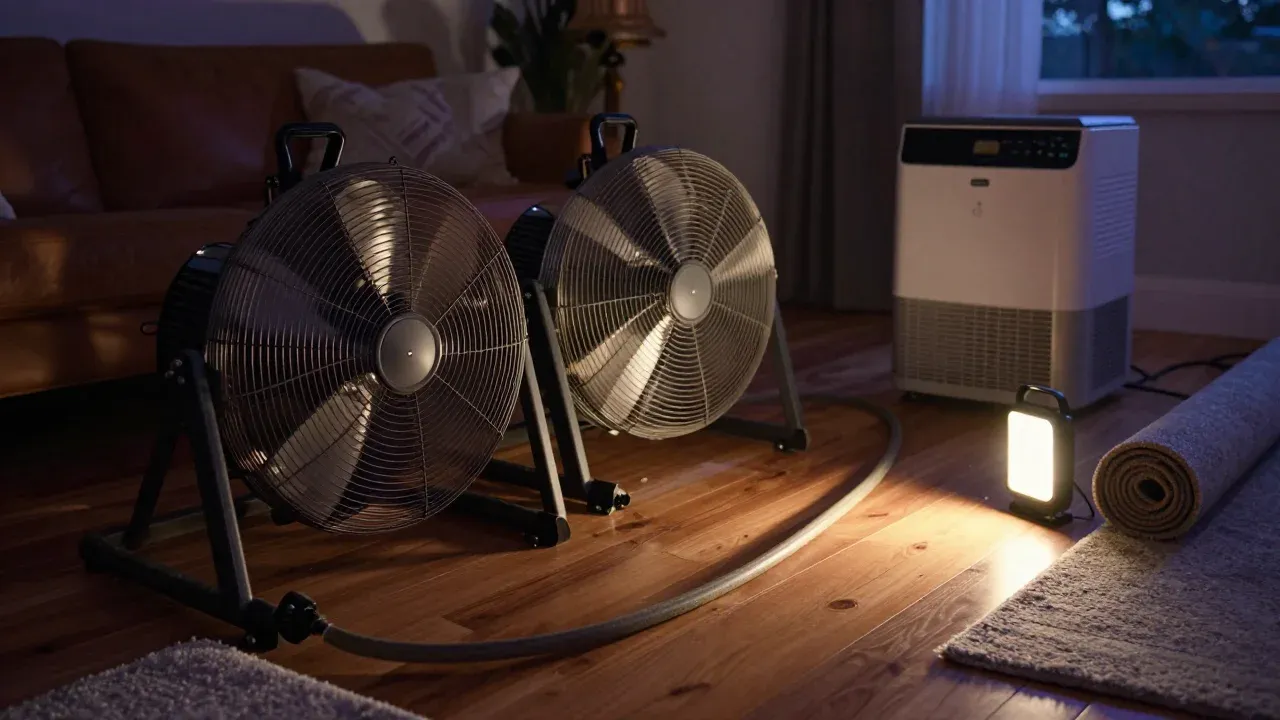
A restoration company wins the water damage call by answering live, arriving when it says it will, and looking local on Google: a phone number it controls, a service area its trucks can reach, photos of its own crew and certifications Google can verify. Insurance program work and referrals fill the other channels, so keep all three alive instead of depending on one.
01
Why does the first call decide a restoration job?
Because water keeps working while the customer decides, and the EPA gives the clock.
He dislikes the insurance administrators, but says that these days you need to be on program to keep the work coming in.
That pressure runs both ways. The customer wants someone now, and you pay for a missed call more than a trade with a booking calendar does. The rest of this page is about the three places those calls come from (forum thread).
02
Where do restoration jobs come from, and what does each one want from my marketing?
Program work, Google and referrals behave differently. Know which you are feeding.
The Restoration & Remediation Magazine guide puts the first row plainly: administrators act as middlemen who handle claims for insurance carriers, and each has its own protocols and reporting expectations (source). Whether to join one is your call. The Google row is the one this page helps with.
03
How do I compete with national call centers on Google?
Owners tell us franchises and call centers out-bid them. Google's rules and your own crew give you four things they cannot copy.
A number you control
Google says a profile's number should connect to your own business location, be under your direct control, and be a local number rather than a central call center helpline.
Named service areas
You can list up to 20 cities or ZIP codes, within about two hours of driving. A call center has no neighborhoods of its own.
Certifications Google checks
For water damage in Local Services Ads, Google lists IICRC certification for select users, plus license and insurance checks.
Your crew on camera
Photos of your own trucks, techs and drying equipment on real jobs show a customer who would arrive. Google wants photos in focus and true to life.
If a competitor breaks the rules
A legitimate franchise location is allowed on Maps. A listing with a fake address, a stuffed name or a phone that is not the business's own can be reported, and the fake listing guide shows the tools and the proof to bring.
Set your service area once, and set it honestly. A list of towns you cannot reach in reasonable time costs you reviews instead of jobs.
If you want to rank beyond your base, read how to show up in towns 25 to 35 miles away without an office before you add them.
Hide your address only if customers do not come to you. Google's address and service-area rules for contractors explain which setup fits a yard or a shop, and make sure you are the primary owner of the profile before an agent or a former marketer touches it.
04
What should happen in the first five minutes of a call?
Same five steps every time, so a 2 a.m. call is handled like a 2 p.m. one.
Test your own line
Call your listed number at 3 a.m. this week from a number you do not use. What the caller hears is your marketing.
-
Step 1: Answer live, in your company name
A person picks up and says your business name and your city. A voicemail greeting or a vague "hello" loses the caller to the next number.
Done when: the caller hears a human and your name within a few rings.
-
Step 2: Ask the four questions that decide the dispatch
Is the water source stopped? How long has the area been wet? Which rooms, and what is wet: carpet, hardwood, drywall? Is there any water near electrical? Write the answers on the job sheet as you go.
- Source stopped?
- How long wet?
- Which rooms?
- Near electrical?
Done when: you can tell a crew lead what they are driving into.
-
Step 3: Give a real arrival window and name who is coming
Say a time you will keep and the name of the tech. A promise you miss costs you the job and a review.
Done when: the caller has a window and a first name.
-
Step 4: Tell them what happens on arrival
Say that your crew will photograph the damage, take moisture readings and start drying. People who know the next step stop shopping.
Done when: the caller can describe the first hour back to you.
-
Step 5: Ask how they found you, and write it down
Record the answer on the job sheet: Google search, map listing, plumber, agent, past customer. Without it you cannot tell which channel pays.
Done when: every job on your sheet has a source.
Step five only works if you can see which calls came from Google. Call tracking for contractors shows how, and the garage door and locksmith playbook has a 24-hour hours mockup for the profile side.
05
Are Local Services Ads worth it for water damage work?
Maybe, once the profile is solid. Read what Google checks before you pay for a lead.
Google says leads that it finds invalid or low quality at the start are not charged, and charged leads can be reassessed and credited later. It also says credits are no longer available for job types or places you do not serve, so keep your service list tight.
Compare a paid lead with your other channels using cost per booked job: Angi vs. Local Services Ads vs. Google Maps vs. referrals, and if you pay a marketing company for "water damage leads", check the nine signs your SEO company is not doing the work.
06
Which playbook should I read next?
Garage door and locksmith
Fake listings, urgent-category screening and 24-hour hours.
Garage door and locksmith playbook →Other questions owners ask
Should I join a TPA program or go direct?
That is a business decision, not a marketing one. A third-party administrator acts as a middleman handling claims for insurance carriers, and each one has its own protocols, documentation standards and reporting expectations. Owners we read in a restoration forum dislike the arrangement but say you need to be on program to stay busy. The safer path is to keep Google and referral work alive beside it, so program work is never your only source of jobs.
Do I need IICRC certification to advertise water damage work with Local Services Ads?
Google lists IICRC certification for select users in its water damage screening, along with a state-level business license, an owner license and general liability insurance, and background checks for the business and owner. What applies to you depends on your state and what your Local Services dashboard asks for.
Can I list 24 hours on Google if an answering service takes my calls?
Google asks for your regular customer-facing hours and says the phone number must be under the direct control of the business. If a person answers in your company name and dispatches your own crew, 24 hours is honest. If the call goes to a shared helpline that serves many brands, it is not. Test it by calling your own number at 3 a.m.
How many cities can I list as service areas?
Google lets you set up to 20 service areas by city, ZIP code or other area, and says the overall area should not stretch farther than about 2 hours of driving from your base. List only places your trucks can reach in time, because a late arrival is the review you can least afford.
A franchise with a national 1-800 number outranks me. Can I report it?
Only if it breaks Google's rules, such as a fake address, a name stuffed with keywords or a phone that is not the business's own. A legitimate franchise location is allowed to be on Maps. If the listing is misleading, the fake listing guide shows which Google tool to use and what proof to bring.
Sources (8)
- US EPA: A Brief Guide to Mold, Moisture and Your Home
- Restoration & Remediation Magazine: How to Work with Third-Party Administrators (TPAs) in Water Mitigation (March 2025)
- Google Business Profile Help: Guidelines for representing your business on Google
- Google Business Profile Help: Manage your service areas for service-area & hybrid businesses
- Google Business Profile Help: Edit your business hours
- Local Services Help: Business screening and verification requirements (United States)
- Local Services Help: About Automated Local Services Ads lead credits
- r/WaterMitigation thread: getting water mitigation jobs, and program work
Why we wrote this. Restoration owners described a different fight from other trades in our November 2026 study of more than 500 contractor comments (how we did the research): insurance program work, referrals and call-center rivals. We matched their words to the EPA, an industry magazine and Google's help pages.

Free, no call needed